
Tech & AV News
Latest News
Is the Digital Revolution Outpacing Our Ability to Adapt?
Is the Digital Revolution Outpacing Our Ability to Adapt?
Reflections from All Things TechIE Podcast Episode 150
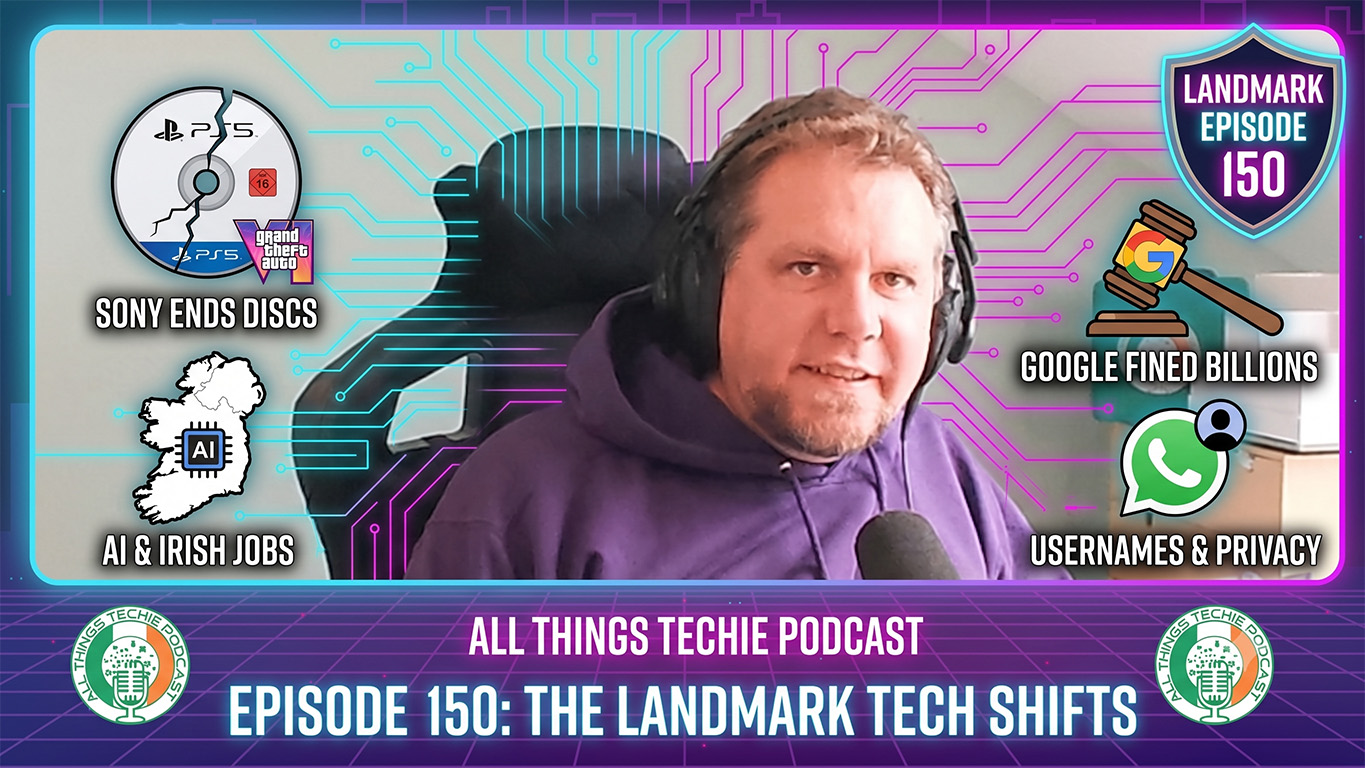
Episode 150 of the All Things TechIE Podcast, hosted by Justin Dawson, is a milestone not only for the show, but also as a snapshot of a tech landscape in relentless transformation. Packed with headline-dominating stories—WhatsApp’s paradigm-shifting move to usernames, Google’s multi-billion euro antitrust defeat, the end of physical gaming discs, a staggering rise in mobile phone fraud, and global privacy breaches—the episode is a clarion call: while technology evolves at breakneck pace, are we as a society, workforce, or even as individuals prepared, protected, and empowered or are we at risk of being permanently left behind?
WhatsApp Usernames: Privacy Progress or New Frontiers for Fraud?
The episode opens with WhatsApp’s move to allow 3 billion users to connect through unique usernames rather than phone numbers—a seemingly simple change with enormous consequences. Justin Dawson dissects the privacy benefits, allowing users to mask their phone numbers and lower their exposure to SIM swap attacks, phishing, and identity theft. Yet, the warning signs are immediate: impersonation and fraud risks are set to escalate, with digital arrest scams and fake accounts raising alarm, especially in WhatsApp’s largest market, India, where the government has already requested to freeze the rollout.
Here, the paradox is evident: while digital innovation offers more protection for personal data, it simultaneously grants fraudsters new tools to exploit systemic blind spots. The username system, meant to offer security, can become a vector for new, harder-to-chase attacks—as the episode unpacks, the very fabric of digital identity is shifting, but trust remains fragile.
The Workforce and AI: Are We Training for a Tsunami or Waiting for a Drizzle?
Perhaps the episode’s most thought-provoking segment is on Ireland’s workforce and the impact of AI. According to Justin Dawson, citing a new IBEC report, nearly two-thirds (64%) of Irish jobs will need significant reskilling due to artificial intelligence, with 82% of working hours affected. Business leaders warn of a “technological monsoon,” yet billions in national training funds remain untapped.
The question isn’t if the AI revolution will hit, but whether we’ll be swept up or swept away. Justin Dawson skillfully contrasts the urgency of investment in human capital—with Ireland’s participation in lifelong learning just above the EU average—and the real risk that outdated approaches could leave the nation’s workforce at a severe disadvantage.
The solution? Not simply more training, but a “total redesign of work itself,” embedded collaboration between government, educators, and employers, and a cultural commitment to treating skills as core infrastructure. The message is as clear as it is urgent: adaptation must move at the pace of technological change—or risk irrelevance.
The End of Physical Media: Convenience’s High Cost
Sony’s decision to eliminate physical game discs for PlayStation starting in 2028 is emblematic of the digital-only economy. While the move is justified by the overwhelming preference for digital downloads (78% of sales for the last fiscal year), the costs are profound—not just for retailers or collectors, but for the very concept of ownership.
Justin Dawson highlights the backlash: the loss of trade-ins, the ballooning costs of storage, and the ominous possibility that digital licenses can be revoked overnight, evaporating entire game libraries and investments. Here, the digital revolution’s promises—convenience, efficiency, access—are shadowed by new constraints and vulnerabilities.
The Scammer’s Playground
Fraud and privacy breaches are recurring themes throughout the episode. Whether it’s the 73% rise in Irish phone fraud, the proliferation of sophisticated “Hi Dad” and bank impersonation scams, or the global BlackVue dashcam privacy fiasco (where strangers could literally watch and listen to drivers around the world via a default setting), Justin Dawson asks the crucial question: are we building technology for benefit first and safety as an afterthought?
The reactions from listeners reinforce the episode’s central anxiety: “We can’t trust any of these tech companies…”; “It’s our responsibility to comply with laws, but tech needs to protect by default”.
Are We Prepared for the Digital Monsoon?
At the heart of episode 150 is a persistent unease: as technology leaps ahead, institutions, regulations, and individual protections strain to keep up. On everything from how we identify ourselves online, how we work, how we play, and how we protect ourselves from digital predators, the infrastructure of training, law, and design is groaning under the pressure.
Are we ready to rethink digital identity when even small changes can unleash waves of fraud?
Will our workers be prepared for the “monsoon” of AI, or will decades-old thinking hold us back from capitalizing on opportunity?
What do we lose—culturally, economically, and personally—when digital-only becomes the only option?
Are current privacy and security frameworks robust enough when the cost of a default setting can be global surveillance?
The Challenge for the Digital Age
Justin Dawson closes with a call: if we want to shape the future, “invest in our people as much as we invest in our tech”. Episode 150 is a potent reminder that innovation is only as strong as our willingness—and our systems—to evolve with it. Will we seize the opportunity, or be swamped by the very tide we helped unleash? The answer, for Ireland and the world, remains unwritten—but the clock is ticking.